



Knowing how to check ULEZ compliance for commercial vehicles in London is an essential operational requirement for trade professionals, delivery fleets, and logistics operators.
Operating across all 32 London boroughs and the City of London Business Hub, the Transport for London ULEZ Scheme runs 24 hours a day, 364 days a year (every day except Christmas Day). Driving non-compliant commercial vehicles anywhere within Greater London incurs daily access fees that directly reduce business profit margins.
For commercial fleet owners, understanding emissions rules and executing a fast, accurate compliance check is the vital first step toward calculating total cost of ownership (TCO), optimizing delivery schedules, and finding verified partners through the LBN Transport & Logistics Directory.
What Does ULEZ Compliance Mean for Commercial Vehicles?
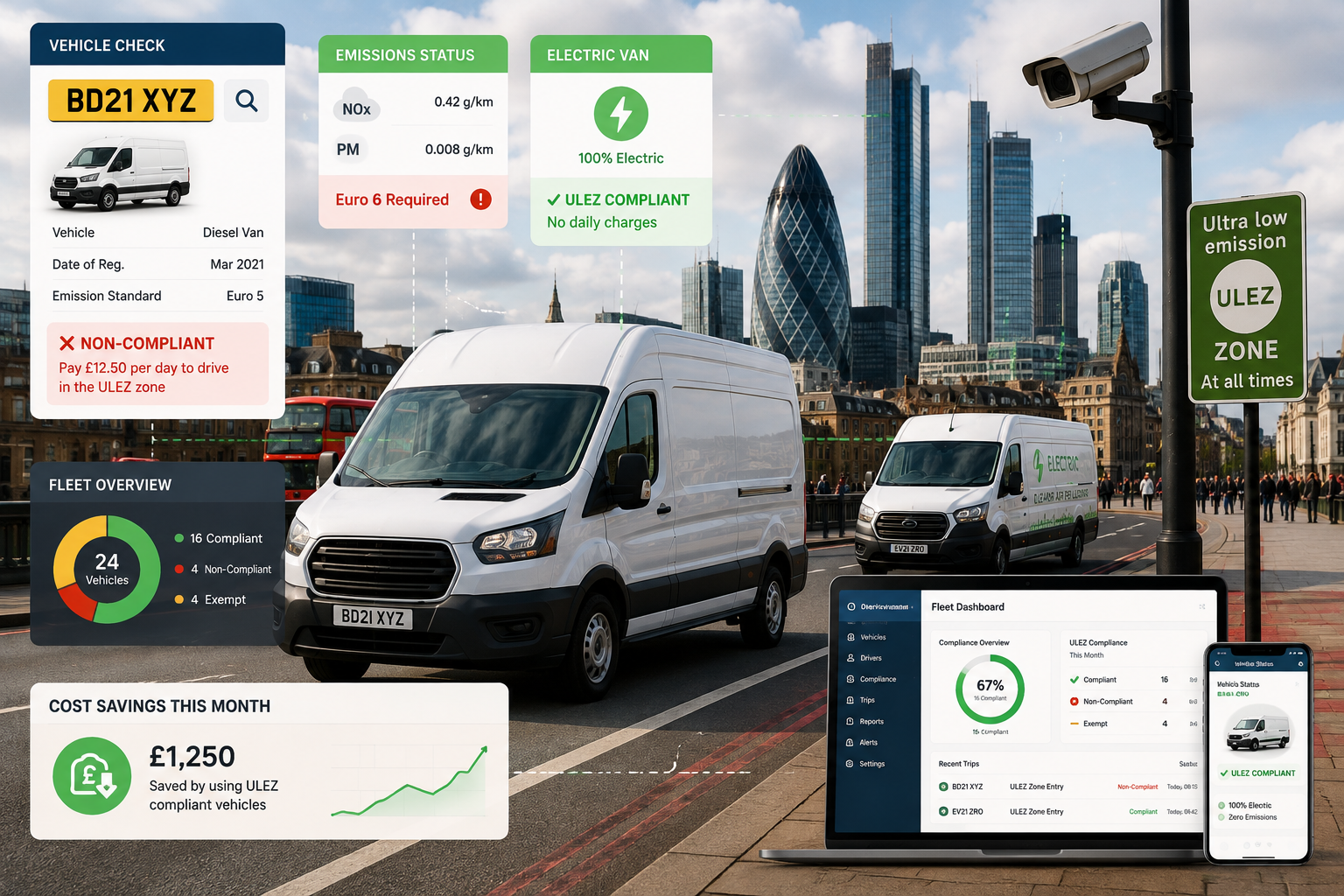
At its core, ULEZ compliance means a vehicle meets or beats specific European emissions limits for Nitrogen Oxides (NO₂) and Particulate Matter (PM). According to the RAC Fleet ULEZ Emissions Guide, commercial vehicles that meet these thresholds drive anywhere within the Greater London ULEZ boundary without paying daily access charges.
The required minimum standard depends strictly on the vehicle’s fuel type and weight category as set out in Transport for London Emissions Standards:
| Commercial Vehicle Category | Weight Threshold | General Registration Date Guide |
| Diesel Light Commercial Vans | Up to 3.5 tonnes GVW | Generally registered after September 2016 |
| Petrol Light Commercial Vans | Up to 3.5 tonnes GVW | Generally registered after January 2006 |
| Heavy Goods Vehicles (HGVs) | Over 3.5 tonnes GVW | Governed by LEZ rules, not ULEZ (registered post-2014) |
| Electric Commercial Vans (eLCVs) | Up to 3.5 tonnes GVW | 100% Exempt from ULEZ daily charges |
Which Commercial Vehicles Need to Meet ULEZ Standards?
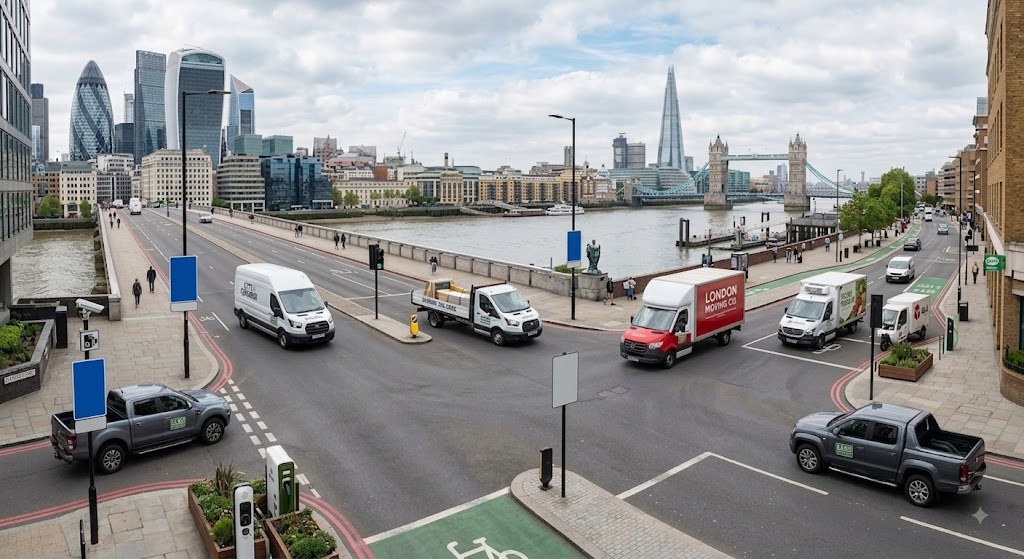
ULEZ compliance rules apply to all commercial vehicles up to 3.5 tonnes Gross Vehicle Weight (GVW) driven in Greater London, regardless of business size or ownership structure:
- Light Commercial Vans: Small, medium, and large panel vans (such as the Ford Transit or VW Transporter) relied on by sole traders and courier networks.
- Specialist Trade Vehicles: Pickups, dropsides, tippers, Lutons with tail lifts, and refrigerated vans used across construction, catering, and events.
- Company-Owned and Leased Fleets: Every vehicle driven for business operations—whether owned outright, on commercial hire-purchase, or leased long-term—must adhere to these limits.
- Heavy Goods Vehicles (HGVs): Lorries, buses, and heavy trucks over 3.5 tonnes GVW are regulated under London’s Heavy Vehicle Low Emission Zone (LEZ) rather than ULEZ, requiring Euro VI engines to avoid daily charges of £100 to £300, as explained in the GOV.UK Clean Air Zone Guide.
Step-by-Step: How to Check Your Commercial Vehicle’s ULEZ Status
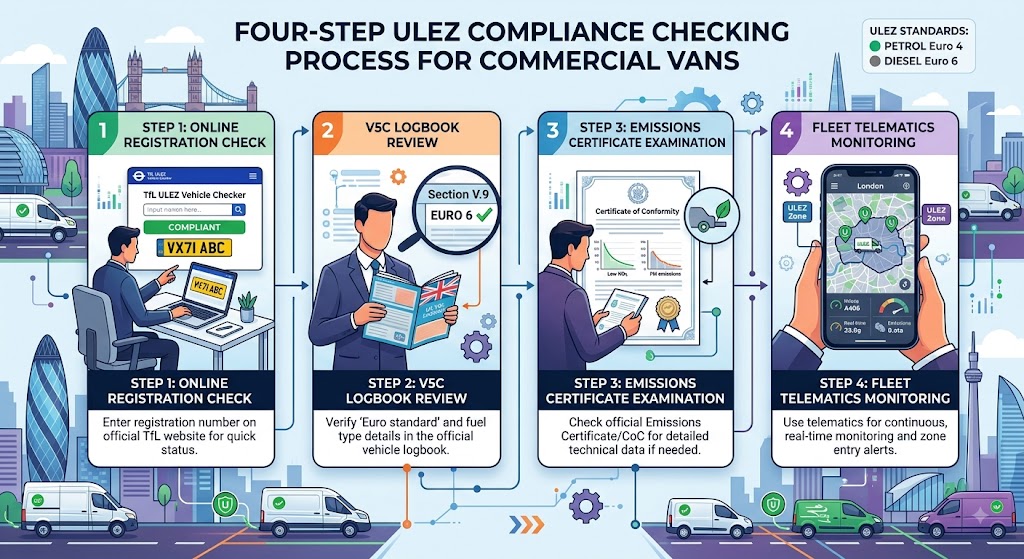
Once you know the required Euro standards, fleet managers can use a four-tier audit process to verify compliance and eliminate the risk of unexpected penalty fines:
- Official Digital Registration Check: Enter every vehicle’s registration number directly into the official TfL Vehicle Checker Tool or the GOV.UK Clean Air Zone Portal for an instant compliance verdict based on live DVLA records.
- Logbook (V5C) Audit: Inspect section D.2 of each vehicle’s official DVLA V5C logbook to verify the recorded Euro status (NO₂ g/km output) rather than relying solely on the registration year.
- MOT & Certificate of Conformity (CoC): For imported, custom, or converted commercial vehicles, request a Certificate of Conformity from the manufacturer to prove emissions compliance directly to TfL.
- Fleet Telematics & Auto Pay Sync: Link commercial fleet telematics with a centralized TfL Fleet Auto Pay account to monitor vehicle movements and prevent missed-payment Penalty Charge Notices across all drivers.
How Much Does ULEZ Cost Commercial Vehicles in 2026?
Running non-compliant vehicles in London introduces steep, cumulative operational expenses:
- The Daily ULEZ Charge: £12.50 per day per non-compliant vehicle under 3.5 tonnes. As outlined in the Autodue UK Clean Air Zone Fees Guide, operating a single non-compliant van 5 days a week adds over £3,250 in annual access fees alone.
- Midnight-to-Midnight Enforcement: ULEZ charges run on a strict calendar-day clock (00:00 to 23:59). A night-shift courier driving into the zone at 11:30 PM and leaving at 1:00 AM triggers two separate £12.50 daily charges (£25.00 total).
- Multiple Journeys Covered: Entering and exiting the zone multiple times within a single calendar day incurs only one £12.50 fee.
- Overlapping London Charges: The ULEZ charge applies alongside other road tolls. Driving a non-compliant van into Central London during operational hours incurs the £18 Congestion Charge on top of the £12.50 ULEZ charge, totaling £30.50 per day. As detailed in The Electric Car Scheme London Congestion Charge 2026 Guide, electric vans registered for TfL Auto Pay receive a 50% discount on the Congestion Charge (£9 per day).
ULEZ Exemptions and Discounts for Commercial Vehicles
Certain commercial categories qualify for official exemptions or extended grace periods:
- Historic Commercial Vehicles: Vehicles built or registered over 40 years ago (under the “Historic Vehicle” tax class) are fully exempt from ULEZ charges according to TfL Discounts and Exemptions, provided they are not used for commercial hire or reward.
- Specialist Agriculture & Breakdown Vehicles: Purpose-built agricultural tractors, mobile cranes, and qualified recovery vehicles may receive specific LEZ/ULEZ exemptions.
- Disabled Tax Class Grace Periods: Commercial vehicles registered under a ‘Disabled’ or ‘Disabled Passenger Vehicle’ tax class qualify for a 100% discount grace period running through 24 October 2027.
- Exemption vs. Grace Period: An exemption is a permanent status (e.g., zero-emission electric vans), whereas a grace period is a temporary window allowing businesses time to transition their fleet before full charges apply.
ULEZ Compliance Impact Across Commercial Sectors
Checking and maintaining clean air compliance provides a clear operational advantage across trade sectors:
1. Builders & Construction Companies
Moving heavy tools, rubble, and raw materials demands high-payload vehicles. Replacing pre-2016 diesel tippers or Luton vans avoids daily £12.50 charges that erode project profit margins.
2. Plumbers, Electricians & Mobile Trades
Tradespeople managing multiple residential jobs across outer London boroughs require compliant vans to prevent daily fees on short local service calls.
3. Couriers & Logistics Providers
Last-mile delivery operators entering Central London face multi-zone costs. Switching to electric commercial vans (eLCVs) eliminates ULEZ fees and secures a 50% discount on the Congestion Charge when enrolled in Auto Pay.
4. Removal & Catering Companies
Specialist Luton box vans and refrigerated units carry high upfront costs. Strategic route planning, utilizing commercial vehicle rental providers, or fitting CVRAS-approved exhaust retrofits helps manage capital expenditure across larger fleets.
What Happens If a Commercial Vehicle Is Not ULEZ Compliant?
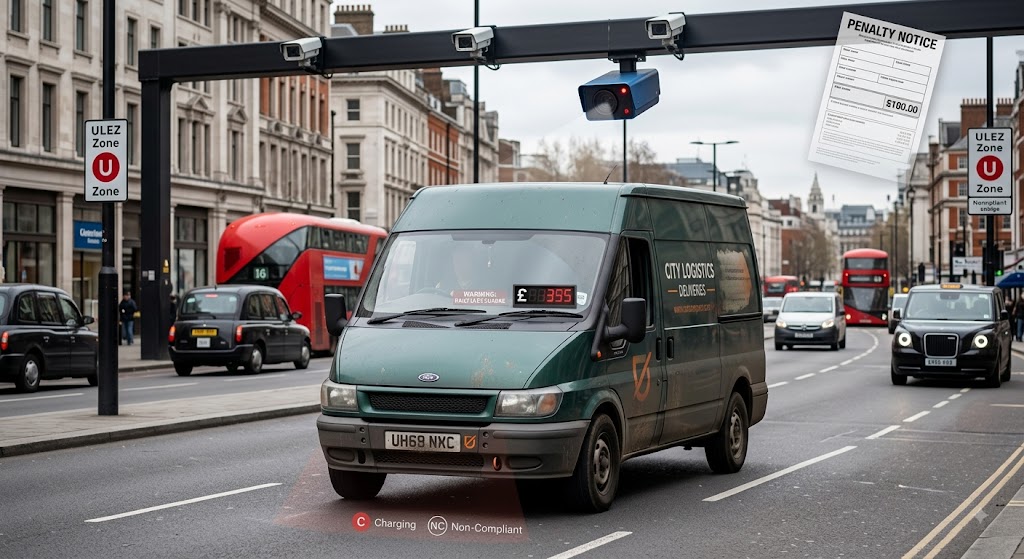
Driving a non-compliant commercial vehicle in London without paying the daily fee leads to quick financial penalties:
- Penalty Charge Notices (PCNs): Missing the £12.50 daily payment by midnight on the third day following travel triggers a £180 PCN, reduced to £90 if paid within 14 days.
- Automated ANPR Enforcement: TfL monitors Greater London using a dense network of automatic number-plate recognition (ANPR) cameras. Unpaid daily charges trigger automatic PCNs for every single day the vehicle travels.
- Compounding Financial Loss: Operating a non-compliant van continuously without settling charges can accumulate thousands of pounds in enforcement penalties in less than a month.
Should Businesses Upgrade, Retrofit, or Replace Non-Compliant Vans?
Commercial fleet owners evaluating non-compliant vehicles have five main strategic paths:
- Option A: Pay Daily Fees. Best for vehicles entering Greater London fewer than 2 days per month (£300/year maximum expenditure).
- Option B: Retrofit Exhaust Systems. Best for specialist, high-value commercial vehicles (e.g., concrete mixers, crane trucks). Systems must be CVRAS-approved to reach Euro 6 standards.
- Option C: Buy Compliant Used Diesel (Euro 6). Best for long-distance haulage and high-mileage trades needing predictable diesel range without ULEZ charges.
- Option D: Switch to Electric Vans (eLCVs). Best for urban multi-drop couriers and local trades aiming to eliminate ULEZ fees, lower running costs, and leverage EV grants. For an in-depth financial breakdown of electric vs. traditional vehicles, see the London Business News EV Comparison Guide.
- Option E: Flexible Commercial Leasing. Best for preserving working capital while acquiring modern Euro 6 or EV fleets with included maintenance and predictable monthly outlays.
How to Build a ULEZ-Compliant Fleet: A 7-Step Checklist
Use this step-by-step checklist to systematically eliminate ULEZ liabilities across your business:
1. Audit every vehicle in your fleet:
Fleet Assessment. Compile a complete register of registration numbers, fuel types, and gross vehicle weights across your entire business fleet.
2. Check registration and emissions status:
Emissions Verification. Run every registration plate through the official GOV.UK Clean Air Zone Portal and verify section D.2 on the V5C logbooks.
3. Calculate annual ULEZ cost exposure:
Financial Review. Multiply the number of non-compliant vehicle days spent in London by £12.50 to quantify your annual operational liability.
4. Identify vehicles needing replacement:
Replacement Planning. Prioritize replacing older diesel vans that incur the highest frequency of London travel.
5. Evaluate electric commercial options and grants:
Electric Alternatives. Explore zero-emission electric vans and apply for the GOV.UK Plug-in Vehicle Grants Scheme (up to £5,000 for large electric vans) to reduce purchase costs.
6. Set up TfL Fleet Auto Pay and route monitoring:
Logistics Management. Register all active commercial vehicles for TfL Auto Pay to protect against missed payments and automated £180 PCNs.
7. Review fleet compliance regularly:
Ongoing Review. Re-audit fleet records every quarter to account for new leased vehicles, driver updates, and expanding low-emission zone policies across the UK.
If you are a London business, fleet operator, or logistics innovator leading the way in sustainable transport, we’d love to hear from you.
Share your latest UK data, insights, or commercial fleet trends to help inform and strengthen the conversation around clean air policy. Get in touch to contribute your insights.
Disclaimer: All the information provided was correct at the time of publication (August 2026) and was collected with the help of accredited tools and AI.

Passionate reporter and editor for the LBN Directory, sharing the latest London business news, trends, insights and more.
